Common WordPress Security Mistakes That Put Websites at Risk
Common WordPress security mistakes include using weak passwords, installing unsafe plugins, and failing to protect website access points. Site owners pour time into content, design, and business growth, but security measures often get pushed to the back burner until something goes wrong. And by then, it’s usually too late.
The good news is that most of these vulnerabilities are completely preventable. At WP Guard, we work with WordPress sites every day and help site owners identify security risks before attackers do. From that experience, we’ll share exactly where the weak spots tend to hide.
In this article, we’ll cover the most common WordPress security mistakes that put websites at risk. You’ll also learn about login gaps and the steps you can take to recover after an attack.
Let’s begin by understanding the reasons websites get hacked.
Why Do So Many WordPress Sites Get Hacked?
Hackers target WordPress because it runs 41.2% of websites on the internet, which makes it the most profitable hunting ground for automated bots and cybercriminals. Most security issues trace back to a handful of fixable mistakes that site owners skip over:

- Outdated Core and Plugin Software: WordPress and plugin developers regularly release security fixes for core software and third-party code. That’s why sites running old software versions with known vulnerabilities are the first ones scanned and targeted by attackers. Once developers publicly disclose new issues, hackers move quickly to exploit any site that hasn’t updated.
- Weak or Default Login Credentials: Strong passwords are one of the most basic security measures out there. Yet the username “admin” paired with an easy password is still widespread across WordPress sites and computer systems alike. Automated bots can easily run through these combinations.
- Nulled Themes and Plugins: Pirated WordPress software and third-party code tend to come pre-loaded with malicious code. That code opens backdoors into your web server and hosting environment without showing any visible warning signs.
- Loose File Permissions: Loose permissions are an entry point that’s easy to overlook. For instance, overly open permissions on your computer systems and operating systems let attackers gain access to files they shouldn’t be able to touch.
- No Active Vulnerability Scanners: Vulnerability scanners exist for a reason. Running them regularly helps you identify security gaps and threats before they escalate. You don’t have to find them out from a search engine warning or a panicked customer email.
From what we’ve seen managing WordPress sites across industries, the most compromised sites are the ones cutting corners on these basics. Fixing these five issues takes far less time than recovering from a breach. So don’t forget to make WP security checks part of your regular website maintenance routine.
What Web Application Attacks Hit WordPress Sites?
Four attack types are generally responsible for the bulk of WordPress security incidents: SQL injection, cross-site scripting, denial of service, and SEO spam.
SQL injection goes straight for your database and pulls out sensitive data like financial details or user credentials (without even provoking any obvious alarms). Cross-site scripting, on the other hand, doesn’t attack your site directly. It uses your site to attack your end users, which is a whole different problem for information security.
Meanwhile, denial of service (DoS/DDoS) attacks flood your web server with malicious traffic until legitimate users simply can’t get through. And among all of the threats, SEO spam tends to fly under the radar the longest. They hide spammy content from site owners while search engines pick it up and start associating your domain with fake websites.
Here’s a summary of how each attack works and where it gets in:
| Attack Type | What It Does | Common Entry Point |
| SQL Injection | Manipulates your database to steal, modify, or delete data | Login forms, contact forms, search bars |
| Cross-Site Scripting (XSS) | Injects malicious scripts that run in your visitors’ browsers | Input fields, comments, plugin vulnerabilities |
| DoS/DDoS | Floods your server with internet traffic to shut out real users | Open endpoints, unprotected wp-login.php, xmlrpc.php |
| SEO Spam | Hides spammy content in your site to exploit your domain’s authority | Outdated plugins, weak file permissions |
A web application firewall, such as Cloudflare WAF, Sucuri, or Wordfence Firewall, detects and blocks many of these attacks before they reach your site. In fact, for most WordPress sites, we’ve seen them provide effective threat prevention and help protect sensitive data.
Not to mention, Wordfence blocks billions of password attack attempts every month, which tells you just how relentlessly attackers hammer at WordPress login pages.
Is Your Site Ready to Recover After an Attack?
Many WordPress owners only think about recovery after an attack has already wiped out their site or data. By that point, the options narrow down, and restoring the website creates unnecessary disruption for the business.
That’s why regular backups and timely updates are both required to reduce website recovery risks.
Regular Backups Help Reduce Website Recovery Risks
We’ve worked with enough compromised sites to know that a reliable backup is the only real safety net when things go wrong. Malware, ransomware, or a botched update can take your site completely offline and wipe out critical data you can’t recover without a clean copy.
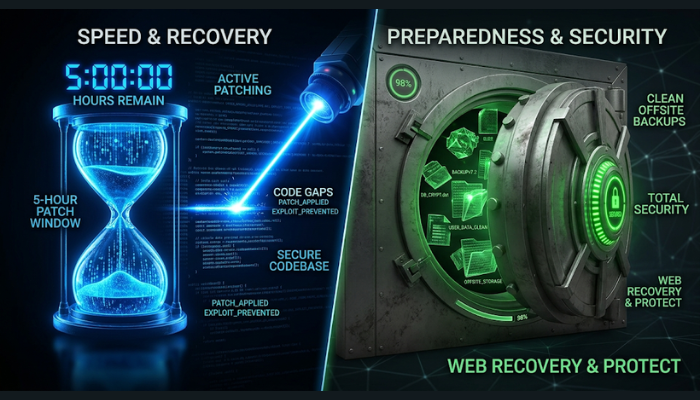
Storing backup data on the same web server as your site defeats the purpose entirely, so offsite storage with encryption is the better move. Tools like UpdraftPlus handle automated daily backups. This removes the risk of simply forgetting and gives organizations a dependable layer of protection against future attacks.
The Patch Gap: Why Slow Updates Are Dangerous
According to Patchstack’s 2026 report, attackers begin exploiting newly disclosed critical vulnerabilities within a median of five hours of public disclosure.
It’s a ticking clock every time a new security issue goes public across websites and systems worldwide. Especially when most site owners take around 14 days to apply critical patches, this leaves a wide open window for future attacks and data breaches. And even the best hardware can’t stop that without updated software.
Enabling automatic updates for trusted plugins and software closes that window before hackers get the chance to scan for it. And it’s one of the most reliable tools security professionals have for ongoing threat prevention and technology upkeep.
Take Back Control of Your WordPress Site’s Security
WordPress security doesn’t have to be overwhelming. The mistakes covered in this article, including weak passwords, overprivileged accounts, and skipped backups, are all fixable.
Strong website security, at its core, refers to staying consistent with the basics across all your systems and websites.
So start with the basics:
- Tighten your login controls
- Run regular vulnerability scans to identify threats
- Store your backups in a secure, encrypted offsite location.
These aren’t one-time tasks. They’re ongoing habits that protect your business, users, and critical data from cyber threats over the long term.
WP Guard is here to help you stay ahead of those threats without managing every detail yourself. If you found this useful, we’ve got plenty more on website security, WordPress protection, and everything in between.
Browse through our other articles and keep your site one step ahead.