How to Track Calories and Price Together on Fast Food Runs?
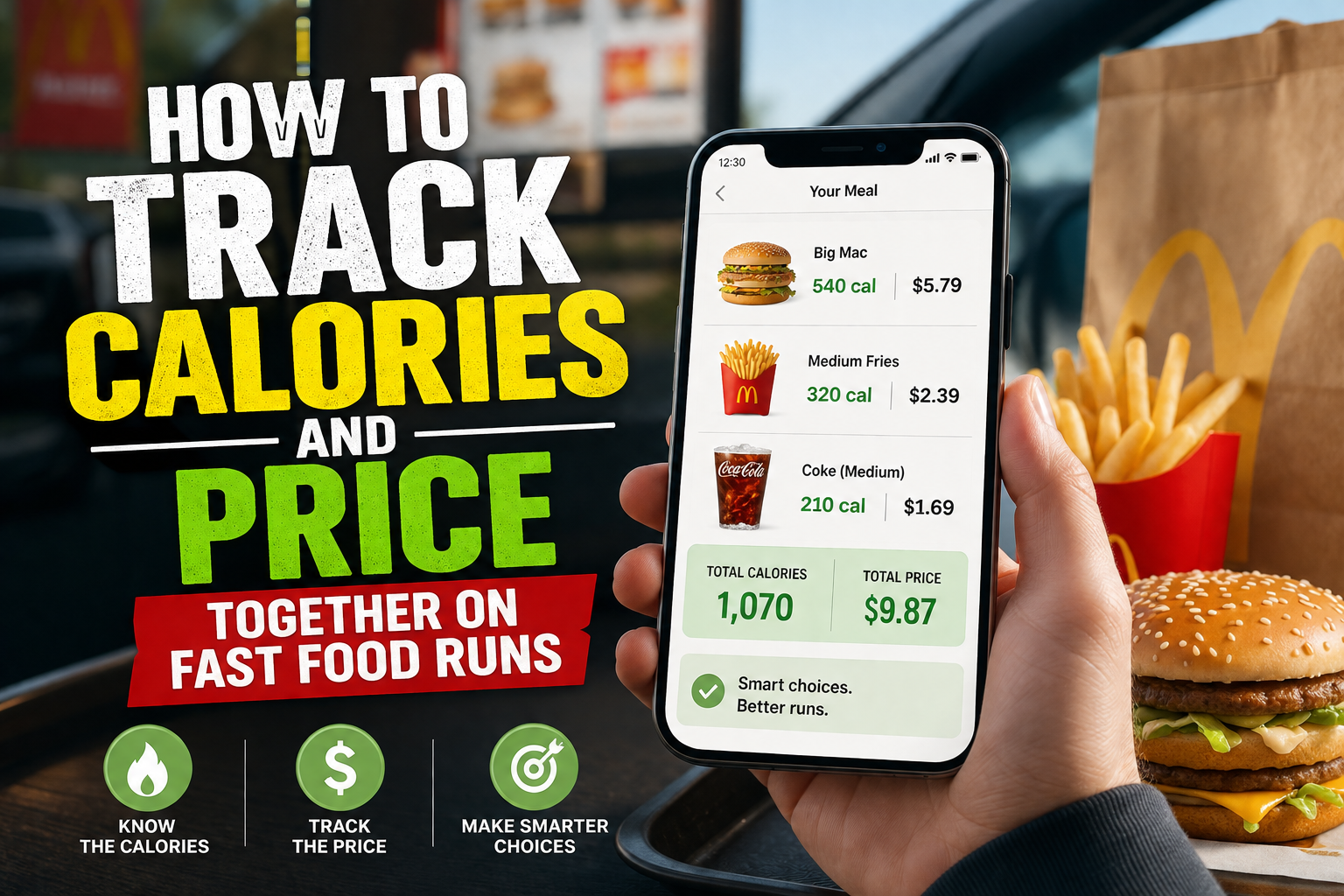
Ordering fast food on a budget usually means watching the receipt total. It rarely means watching both the receipt and the calorie count at the same time. You can do both without much extra effort — you just need to check two numbers before you order instead of one, and know where to find them.
Why Price-Only Thinking Backfires
Most people build their fast food habits around price alone. A medium Double Double and an Apple Fritter feels like a reasonable $6 stop. But that combination also adds up to roughly 600-700 calories before lunch even starts, depending on the donut size and how the coffee is made. Neither the price tag nor the drive-thru menu board tells you that. You only find it by checking the nutrition breakdown separately, which most people never do because it takes an extra step.
The result is a habit that looks cheap on paper but gets expensive in a different currency — extra calories that stack up over a week of coffee runs, lunch stops, and dinner orders. Tracking both numbers side by side turns a blind purchase into an informed one, and it doesn’t cost you anything extra to do it.
Checking Nutrition Info Before You Order at Any Chain
Every major fast food chain now publishes some form of nutrition data, but the quality and usability of that data varies a lot. Some chains bury it in a PDF with dozens of pages. Others break it down item by item on their own site. A few chains have inspired independent tools that make the process faster than digging through official menus.
Panda Express is a good example. If you’re building an order there — say a Bigger Plate with two entrees and a side — figuring out the total calories, protein, and sodium by hand means cross-referencing multiple menu pages. A dedicated panda express nutrition calculator lets you add each item to a virtual plate and see the running total update instantly, the same way a shopping cart updates a price total. That’s the model worth applying everywhere you eat: build the order first on a calculator or nutrition page, then place it in person or through the app once you know what you’re actually getting.
The same logic applies at Tim Hortons. Before you commit to a Steak & Egg Breakfast Sandwich plus hash browns, pull up the nutrition guide and check the calorie count against what you’re planning to eat later in the day. It takes less time than waiting in the drive-thru line.
Practical Habits for Watching Both Numbers
A few habits make this easier to stick with, whether you’re grabbing coffee or a full meal.
Check nutrition info before you’re in line, not after. Once you’re at the counter or speaking into a drive-thru speaker, you’re committed to deciding fast. Look up calories and price at home or in the parking lot instead, when you’re not under pressure to order something.
Compare size options directly. A large Tim Hortons coffee with cream and sugar can run noticeably higher in calories than a medium, for a price difference of maybe 30-40 cents. If the calorie gap matters more to you than the small savings, that’s useful information to have before you order, not after.
Swap one high-calorie item instead of cutting the whole order. If a bowl or plate comes in higher than you wanted, swap a fried side for a lighter one rather than skipping the meal entirely. Tools that let you rebuild a plate item by item make this kind of swap easy to test before committing.
Keep a rough weekly total, not just a daily one. One higher-calorie stop won’t undo a week of reasonable eating. What matters is whether your fast food runs average out to something sustainable over five or six days, not whether any single order is perfect.
Common Mistakes People Make
The biggest mistake is assuming “value meal” means low calorie. Combo deals are priced to move volume, not to hit a calorie target, and bundling a sandwich with fries and a drink can easily double the calorie count of the sandwich alone.
The second mistake is checking nutrition info once and assuming it applies to every order after that. Menus change. Seasonal items rotate in and out. A calorie count you memorized six months ago may not match what’s on the menu today.
The third mistake is only tracking calories for “unhealthy” items and skipping the check on things that seem safe, like salads or wraps. Some salad and sauce combinations carry more calories than a basic sandwich once dressing and toppings are added in.
FAQs
Does checking nutrition info before ordering actually save money?
Not directly, but it prevents the kind of impulse upsizing that adds cost and calories at the same time — a bigger drink or an added side usually costs more and adds calories neither line item shows on its own.
Is it worth tracking calories for coffee-and-donut stops, or just full meals?
Coffee and pastry stops are worth tracking too. A daily coffee habit with added flavor shots and a pastry can add up to more calories over a week than a single sit-down meal.
How accurate are online nutrition calculators compared to what’s posted in-store?
They’re generally based on the same official nutrition data the chain publishes, just organized in a more usable format. Double-check against the chain’s own published PDF if an item seems unusually high or low.
What’s the easiest way to build this into a routine?
Pick one or two chains you visit most often and bookmark their nutrition pages or calculators. Checking two familiar sources takes less time than searching fresh every visit.
Should I track macros too, or just total calories?
Total calories are the simplest starting point. Once that becomes routine, protein and sodium are the next two numbers worth watching, especially for anyone managing blood pressure or trying to hit a protein target.
Final Thoughts
Fast food doesn’t have to be a guessing game on either front. Checking price and nutrition together before you order takes a few extra minutes, and it turns a routine coffee run or lunch stop into a choice you actually made on purpose.